Understanding Scar Tissue After an Injury
If you have ever sprained an ankle, strained your back, or recovered from surgery, you have probably dealt with scar tissue whether you realized it or not. Scar tissue is your body's natural repair material. When muscles, tendons, ligaments, or fascia are damaged, your body quickly lays down collagen fibers to patch the area and protect it while it heals.
The problem is that this repair tissue is not the same as the original tissue. Healthy muscle and connective tissue fibers are organized in parallel lines that allow them to stretch, glide, and contract smoothly. Scar tissue fibers are laid down in a more random, haphazard pattern. The result is tissue that is stiffer, less elastic, and often weaker than what it replaced.
Scar tissue can also bind to surrounding structures, forming what are known as soft-tissue adhesions. These adhesions act like internal glue, sticking layers of muscle and fascia together that are supposed to slide freely over one another. For many people in Alexandria and the surrounding Central Louisiana area, these adhesions are the hidden reason an old injury still causes pain, stiffness, or limited movement months or even years later.
Why Scar Tissue and Adhesions Restrict Movement
To understand why adhesions cause problems, it helps to picture how your body is supposed to move. Your muscles are wrapped in fascia, a thin connective tissue that allows each muscle group to glide independently. When adhesions form, that gliding motion is lost.
This can lead to several common complaints:
- Reduced range of motion. A stiff shoulder after a rotator cuff injury or a tight neck after whiplash often involves adhesions limiting normal movement.
- Pain with activity. Tissue that cannot stretch properly pulls on surrounding structures, creating discomfort during everyday tasks.
- Compensation patterns. When one area cannot move well, other muscles pick up the slack, which can create new areas of strain and pain elsewhere in the body.
- Chronic tightness. Many people stretch and foam roll without lasting relief because the adhesions themselves need to be physically addressed.
Left unaddressed, restricted tissue can contribute to recurring injuries, joint stress, and ongoing discomfort that interferes with work, exercise, and sleep.
How Manual Therapy Addresses Scar Tissue
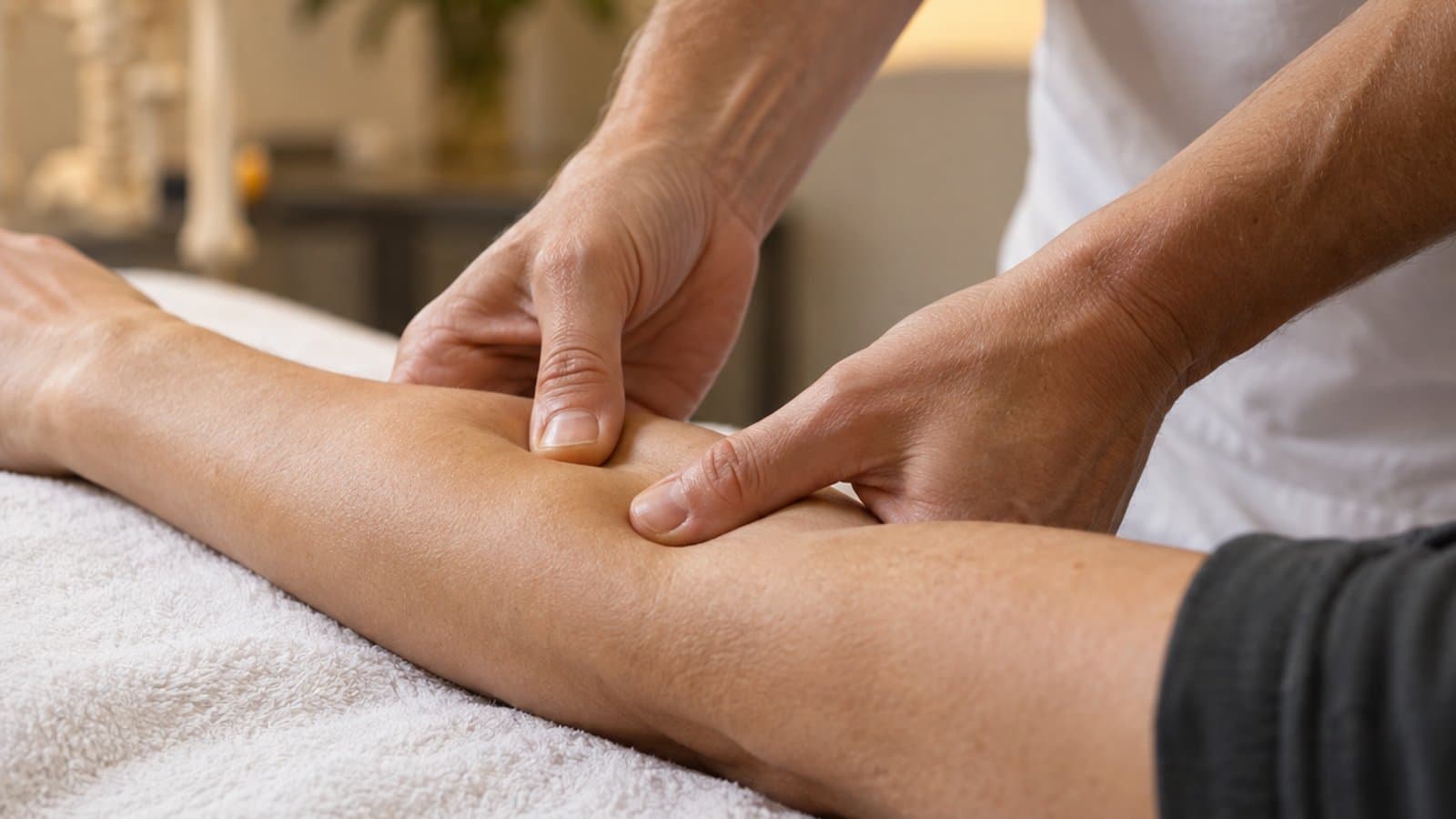
At Mayfield Advanced Chiropractic in Alexandria, LA, our team includes providers who focus on soft-tissue treatment as part of a complete approach to musculoskeletal care. Manual therapy works by applying targeted pressure and movement to break down adhesions, improve tissue quality, and restore normal motion.
Graston Technique and Instrument-Assisted Soft Tissue Mobilization (IASTM)
One of the most effective tools for addressing scar tissue is instrument-assisted soft tissue mobilization, often referred to as IASTM or the Graston Technique. This approach uses specially designed stainless steel instruments that allow the provider to detect and treat areas of restriction with precision.
The instruments are glided over the skin in specific patterns, creating controlled micro-trauma in the affected tissue. This stimulates a localized healing response, encouraging the body to reabsorb disorganized scar tissue and replace it with healthier, more functional fibers. Many patients notice improved mobility and reduced pain as the tissue remodels over a series of sessions.
Hands-On Soft-Tissue Work
Manual soft-tissue techniques complement instrument-assisted work. These may include:
- Myofascial release, which applies sustained pressure to release tension in the fascia
- Cross-fiber friction, which works across the grain of the tissue to break up adhesions
- Trigger point therapy, which targets tight, irritable knots within the muscle
- Active release-style techniques, which combine pressure with guided movement to free stuck tissue
These methods are often combined with chiropractic adjustments, corrective exercises, and stretching recommendations so that gains in mobility are reinforced between visits.
What to Expect During Treatment
Your first visit typically begins with a thorough evaluation. Your provider will review your injury history, assess your range of motion, and palpate the affected tissues to identify areas of restriction. From there, a personalized treatment plan is developed based on your specific condition and goals.
During a soft-tissue session, you may feel firm pressure and some mild discomfort as restricted areas are worked on. Most patients describe it as a "good hurt" rather than sharp pain. It is also common to experience some temporary soreness or mild redness in the treated area afterward, similar to what you might feel after a workout. This typically resolves within a day or two and is a normal part of the tissue remodeling process.
Staying hydrated, following any home exercise recommendations, and communicating openly with your provider about how you respond to treatment will help you get the most out of each session.
How Long Does Recovery Take?
Recovery timelines vary from person to person and depend on several factors, including how long the scar tissue has been present, the severity of the original injury, your overall health, and how consistently you follow your care plan.
As a general guideline, recent injuries with mild adhesions may respond within a handful of sessions, while long-standing restrictions from older injuries or surgeries often require a longer course of care. Many patients begin noticing meaningful improvements in mobility and comfort within the first few weeks of treatment, with continued progress as tissue remodeling occurs over time.
The key point is that scar tissue does not have to be permanent. With the right approach, even adhesions that have been present for years can often be significantly improved.
Frequently Asked Questions
Is manual therapy for scar tissue painful?
Most patients tolerate treatment very well. You may feel firm pressure and mild discomfort when restricted areas are addressed, and some temporary soreness afterward is normal. Your provider will adjust the intensity based on your comfort level and feedback.
Can old scar tissue from years ago still be treated?
Yes. While older adhesions may take more sessions to address, the body retains the ability to remodel tissue. Many patients with long-standing restrictions from old injuries or surgeries experience meaningful improvement with consistent care.
Do I need a referral to schedule an appointment?
In most cases, no referral is needed. You can contact our office directly to schedule an evaluation, and our team will help determine whether manual therapy is appropriate for your condition.
Take the Next Step Toward Better Movement
If scar tissue or soft-tissue adhesions are holding you back, the team at Mayfield Advanced Chiropractic is here to help. We are experts in identifying and treating the soft-tissue restrictions that keep you stiff, sore, and limited. Call us today at (318) 704-5730 or visit mayfieldclinics.com to schedule your evaluation and start moving freely again.