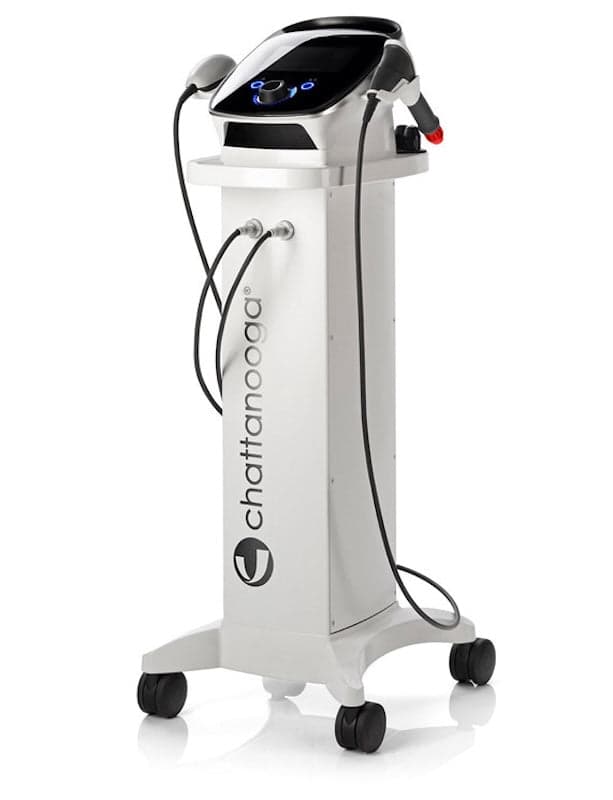
If you've been dealing with stubborn heel pain, a tennis elbow that won't quit, or shoulder tendinitis that's outlasted three rounds of stretching, ice, and ibuprofen — you've probably looked at every treatment short of surgery. Radial Pressure Wave Therapy, sometimes called shockwave therapy, is one of the more interesting tools to emerge in non-invasive musculoskeletal care over the last decade. At Mayfield Advanced Chiropractic in Alexandria, LA, we use the Chattanooga Intelect RPW 2 — and we're currently the only practice in central Louisiana with this specific platform.
This post is a straight breakdown of what RPW is, who it helps, who it doesn't, and what your first session actually feels like. No marketing fluff.
What "Shockwave" Actually Means
The name "shockwave" makes it sound dramatic. It's not. The technology delivers controlled mechanical pressure waves through the skin and into the underlying tissue. Think of it as a focused, rapid tapping sensation — somewhere between a deep-tissue massage and a sports-medicine percussion gun, with a frequency and energy profile dialed in for therapeutic effect.
There are two broad classes of devices: focused shockwave (which converges energy at a specific depth) and radial pressure wave (which dissipates energy across a wider, shallower area). The Chattanooga Intelect RPW 2 is the radial type, which is the better fit for most chronic tendon and fascial conditions — the targets sit relatively close to the skin and benefit from broader coverage.
What It's Doing to Your Body
Stubborn tendon pain — what doctors call tendinopathy — is rarely about acute inflammation. It's a maladaptive healing pattern. The tissue tried to repair itself, got stuck partway, and now you have a chronically irritated structure that doesn't respond to rest, anti-inflammatories, or stretching alone.
Pressure wave therapy works on that stuck tissue in a few ways:
- **Mechanotransduction.** The pressure waves create micro-stresses that signal cells to upregulate repair processes — collagen remodeling, vascularization, growth factor release.
- **Increased local blood flow.** Better perfusion delivers nutrients and clears metabolic waste from chronically underperfused areas.
- **Disruption of pathological tissue.** The mechanical input helps break up scar tissue, calcific deposits, and fibrotic adhesions that have built up over months or years.
- **Pain modulation.** Sustained input changes how the local nervous system processes pain signals, often reducing baseline pain even before structural changes have caught up.
That last point is why some patients feel better very quickly — the pain modulation effect can show up after one or two sessions, even though the underlying tissue hasn't fully remodeled yet.
Who Responds to RPW
We've been using the Chattanooga Intelect RPW 2 for over a year now. The pattern is clear: the conditions that respond best are exactly the ones traditional approaches struggle with the most.
Strong responders: - Plantar fasciitis and chronic heel pain - Achilles tendinopathy - Patellar tendinopathy (jumper's knee) - Tennis elbow (lateral epicondylitis) and golfer's elbow (medial epicondylitis) - Greater trochanteric pain syndrome (chronic hip / outer-thigh pain) - Shoulder tendinopathies and rotator-cuff irritation - Trigger finger - Myofascial trigger points and chronic muscle tightness
Conditions where RPW is not the right tool: - Acute fractures or unstable joint injuries - Active infection at the treatment site - Bleeding disorders or active anticoagulation requiring caution - Pregnancy (over the abdomen / pelvis) - Pacemakers and certain implanted devices, depending on location - Cancer in the area being treated
If any of those apply, we'll tell you during the evaluation. We don't treat people who shouldn't be treated.
What a Session Actually Feels Like
You'll lie or sit so the treatment area is exposed and supported. We apply conductive gel to the skin — same idea as ultrasound gel — and the applicator is positioned over the painful tissue. The device delivers pressure waves at a controlled frequency and intensity. We start lower and dial up to the highest level you can tolerate, which is usually where the therapeutic effect is strongest.
Most patients describe it as intense but tolerable. Areas of active inflammation are the most sensitive — we expect that, and it's part of how we confirm we're hitting the right tissue. The actual treatment runs about 10 to 15 minutes. You walk out the same as you walked in. No downtime, no driving restrictions, no soreness that prevents normal activity.
For 24 to 48 hours after, you may feel mild soreness in the treated area, similar to a workout. That's normal and a sign the tissue is responding.
How Many Sessions
Most conditions respond in three to six sessions, scheduled about a week apart. We reassess after session three. If you're trending in the right direction — less pain, better function, more tolerance for the activities that used to flare it — we finish the protocol. If you're not, we have an honest conversation. Sometimes we add complementary therapies (rehab, dry needling, manual therapy). Sometimes we refer for imaging or to a referral partner.
What we don't do is string people along through endless sessions for a treatment that isn't working. RPW responders usually declare themselves by visit four. If you're not one, we want to know early so we can pivot.
What Else We Combine It With
Because we're a chiropractic practice first, RPW doesn't happen in isolation. Most stubborn tendon conditions are downstream of something — a posture pattern, a movement compensation, a related joint that's not moving well. We treat the local problem with shockwave, and we treat the upstream cause with adjustments, targeted rehab, and home strategies.
That combined approach is part of why our outcomes hold. Local pain relief from shockwave is great; pairing it with the structural and behavioral changes that prevent recurrence is what keeps you out of our office long-term.
Cost and Insurance
In most cases, RPW is not covered by insurance and is paid out of pocket. We keep cash pricing transparent and explain the total expected cost of a full course of treatment during your evaluation — before any treatment begins. There are no surprises.
For most people, the math is simple: a course of RPW costs less than a single referral consult plus an MRI plus the months of physical therapy that often precede a surgical referral, and the outcomes for tendon pain are frequently better.
Ready to See If It's Right for You
If you've been dealing with chronic tendon or soft-tissue pain that hasn't responded to the usual approaches, an evaluation is the right next step. We'll examine the area, confirm whether RPW is appropriate, and lay out the plan and the cost before you commit to anything. No pressure, no upsell — just a clear answer either way.
Call our Alexandria office or book online. We'll get you in for an evaluation, and if shockwave is the right tool for what you're dealing with, you can start the same week.